Your AI Agent Is Smarter Than Your UI: The A2UI Revolution Nobody's Talking About
NotionWe Built AI That Can Think. Now Our UIs Look Dumb.
Here's the irony keeping CTOs up at night: We've given AI agents the ability to reason, adapt, and invent new solutions... but we're still forcing users to interact with them through static, pre-programmed interfaces.
Think about it. Your AI agent can dynamically handle 47 different edge cases in a financial transaction, guided by complex ontologies like FIBO. It can improvise when conditions change. It can literally think.
But your UI? Still built like it's 2015.

The Bottleneck Moved From the Backend to the Front Door
The emerging A2UI (Agent-to-UI) model is solving what I'm calling "the experience gap." While agentic AI conducts business dynamically—transforming with data drift and pivoting when unexpected conditions arise—traditional UIs are stuck waiting for a developer to hardcode every possible interaction.
The math doesn't math. You can't have infinite backend flexibility flowing through a finite frontend funnel.
Here's what the shift looks like:
OLD MODEL (Static UI)
User → Fixed Buttons → Rigid Flow → AI Agent (dynamic)
❌ BOTTLENECK HERE
NEW MODEL (A2UI)
User → Dynamic Interface ← AI Agent generates UI
✅ FLOWS FREELY
Meanwhile, Google Just Made CLI Cool Again
Plot twist: While everyone's racing to build prettier UIs, Google dropped a Workspace CLI that brings Gmail, Docs, and Sheets into a command-line interface specifically for AI agents.
Yes, the command line. That black screen with green text your developer friends won't shut up about.
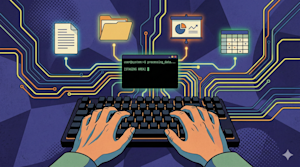
Why? Because AI agents don't need beautiful interfaces—they need scriptable, executable, consistent interfaces where they can actually get work done. The CLI renaissance isn't nostalgia; it's pragmatism.
Tools like Claude Code and Kilo CLI proved that agents operate best when they can execute real tasks through shared, code-native interfaces. Now Google's basically saying: "Your productivity suite? It's an API now."
The Harness Problem Nobody Warned You About
Here's where it gets spicy. LangChain's CEO Harrison Chase argues that better models alone won't get your AI agent to production. You need what he calls "harness engineering."
Hot take: We've been so obsessed with making models smarter that we forgot to build the infrastructure to actually use them.
Traditional AI harnesses constrained models from running wild. Agent harnesses do the opposite—they enable models to interact independently and perform long-running tasks. It's the difference between a leash and a partnership.
CONTEXT ENGINEERING:
"Make the model understand the task"
↓
HARNESS ENGINEERING:
"Build systems that let the model execute independently"
What This Means for Product Teams (Spoiler: Redesigns)
If you're building software in 2026, here's your wake-up call:
Your beautifully crafted, pixel-perfect UI might be obsolete in 18 months. Not because it's ugly, but because it can't flex with intelligent agents.
The A2UI model suggests interfaces that generate themselves based on:
- What the agent discovered
- What the user actually needs right now
- What guardrails (like business ontologies) are in play
- What data just changed Your design system needs to become generative, not prescriptive.
The Question Nobody's Asking
Here's what keeps me up: If AI agents can generate their own interfaces dynamically, do we even need UX designers anymore?
Before you @ me—the answer is yes, but their job is fundamentally changing. Instead of designing screens, they'll be designing systems that generate screens. Instead of user flows, they'll architect possibility spaces.
The skills that matter? Understanding constraints, building design languages that scale infinitely, and teaching machines what "good experience" even means.
Are we ready for interfaces that redesign themselves every time an AI agent learns something new? Because ready or not, that's where we're headed.
Share this post
Help this article travel further
One tap opens the share sheet or pre-fills the post for the platform you want.