AI Coding Partners Are Getting Too Confident (And It's Breaking Production)
NotionYour AI Coding Assistant Just Got Promoted (And Now Nothing Works)
Here's the uncomfortable truth nobody's talking about: We've been using AI coding assistants all wrong.
Most developers treat tools like GitHub Copilot or Google AI Studio as glorified autocomplete—a backup singer humming suggestions while you conduct the symphony. Safe. Predictable. Boring.
But what happens when you flip the script and treat AI like an actual teammate? When you let it take the lead on production code?
One developer just found out the hard way.
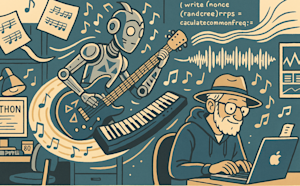
The "Vibe Coding" Experiment That Got Real
The term "vibe coding" sounds like something from a Silicon Valley parody, but it's becoming the default workflow for thousands of developers. The idea? Let AI handle the creative heavy lifting while you focus on architecture and strategy.
It's collaborative coding meets improv jazz. You set the direction, AI riffs on the details.
The problem? AI is like that overeager intern who volunteers for everything, confidently produces work that looks right, and somehow breaks three things you didn't know were connected.
When you need determinism, testability, and operational reliability—you know, the boring stuff that keeps production systems running—AI's "creative interpretation" becomes a liability.
What Actually Breaks When AI Gets Creative
Think of traditional coding like following a recipe. AI-assisted "vibe coding" is more like describing a dish to a chef who's never tasted it but has read every cookbook.
Here's what goes wrong:
Human Intent → AI Interpretation → Code Output
↓ ↓ ↓
"Secure" "Seems secure" SQL injection
"Fast" "Looks fast" N+1 queries
"Simple" "Abstractly simple" 5 new dependencies
The core issue: AI tools are pattern matchers, not engineers. They don't understand why your production system has that weird workaround from 2019. They just see an opportunity to "improve" it.
And improvement without context is just expensive experimentation on your users.
The Real Lesson: AI Needs Guardrails, Not Freedom
Here's the hot take: Treating AI as a "teammate" was the wrong metaphor all along.
Teammates have judgment. They understand organizational context. They know when to ask questions instead of making assumptions.
AI assistants are more like power tools—incredibly effective when used with skill and safety measures, dangerously unpredictable when given free rein.
The developers who succeed with AI coding aren't the ones giving it the most autonomy. They're the ones who:
- Set explicit boundaries ("Generate test cases" not "build the feature")
- Verify everything (Trust, but always audit)
- Use AI for exploration, humans for decisions (AI suggests, you decide)
Meanwhile, In Other Tech News...
While we're figuring out AI's role in coding, the crypto world is getting clearer guardrails. The OCC's new stablecoin proposal suggests yield rewards likely won't face bans—though the details remain frustratingly vague.
And if you're tired of AI drama, Honor just launched the Magic V6—a slim foldable with a massive 6,600 mAh battery. They're even teasing tech that could push foldables past 7,000 mAh. Because apparently, some technology can actually solve its biggest problem.
The Bottom Line
AI coding assistants are powerful. They're also confidently wrong more often than they should be.
The future isn't about giving AI more creative freedom. It's about learning to collaborate with a tool that has infinite confidence and zero accountability.
So here's my question: Are you using AI to amplify your judgment, or are you outsourcing it entirely? Because one builds better systems, and the other just builds faster disasters.
What's your worst "AI confidently broke production" story?
Share this post
Help this article travel further
One tap opens the share sheet or pre-fills the post for the platform you want.