AI Isn't Just a Tool Anymore — It's Becoming Your Brain's Autopilot
NotionWe're Worried About the Wrong AI Threat
Everyone's losing sleep over deepfakes and AI-generated misinformation. Meanwhile, the real transformation is happening in plain sight—and it's way more insidious.
Here's the uncomfortable truth: AI is evolving from tools we consciously use to prosthetics we unconsciously wear. Think about that for a second.
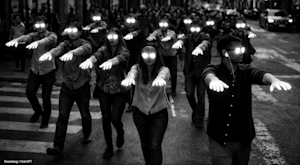
From Hammer to Hearing Aid
When we call AI "just a tool," we're thinking hammers and calculators—things you pick up, use deliberately, and put down. But AI isn't staying in that category.
It's transitioning into something closer to prescription glasses or a pacemaker. Products that become extensions of you. That mediate your reality without you consciously controlling them.
The kicker? No creepy brain implants required. We're talking mainstream consumer products you'll order with free two-day shipping.
Traditional Tool AI Prosthetic
↓ ↓
[You decide] → Tool Device → [Suggests] → You comply
↓ ↓
Outcome Outcome
Control Influence
The Daily Whispers That Reshape You
Imagine AI-powered earbuds that don't just play music. They analyze your conversations in real-time and whisper suggestions: "Maybe don't mention that project—Sarah seems stressed." "This is a good time to ask for that raise."
Or smart glasses that overlay confidence scores on people's faces during meetings. A fitness tracker that doesn't just count steps but nudges you toward specific stores, restaurants, and even social interactions based on "health optimization."
Sound far-fetched? All the underlying tech exists today. It's just a matter of packaging.
Why This Is Different From Your Smartphone
You might be thinking: "My phone already does this." Not quite.
Your phone requires you to look at it, unlock it, open an app. There's friction. There's conscious engagement. You maintain the illusion of control.
AI prosthetics eliminate that friction. They operate in your peripheral awareness—suggesting, nudging, optimizing—while you think you're making independent choices.
Decision Flow with AI Prosthetics:
- Situation occurs
- AI processes context (you don't notice)
- AI generates recommendation
- Recommendation delivered as "helpful suggestion"
- You follow it (feels like your idea)
- AI learns from outcome
- Repeat 1000x daily The scary part? Each individual suggestion seems helpful. It's the cumulative effect that erodes agency.
We're Not Ready for This
As the VentureBeat piece points out, we're still debating AI through an outdated lens. "Is this good or bad?" misses the point entirely.
The question isn't whether AI prosthetics will be useful—they absolutely will be. The question is: At what point does optimization become manipulation?
When your AI assistant has guided 10,000 micro-decisions over six months, are you still you? Or are you the person the algorithm shaped you into?
What Happens Next
Here's my hot take: Within three years, the first true AI prosthetic will hit the market. It'll be marketed as productivity enhancement or wellness optimization.
Early adopters will rave about it. Critics will sound like Luddites. And by the time we realize we've crossed a line, millions of people will already be on the other side of it.
The deepfake problem? We can verify, authenticate, and regulate that. But how do you regulate something that lives in the gap between thought and action?
The Bottom Line
AI isn't coming for your job or your social media feed. It's coming for something way more valuable: your agency.
And unlike dramatic AI apocalypse scenarios, this one doesn't require malicious intent. Just really good product designers, massive convenience, and our very human tendency to outsource difficult decisions.
So here's the question we should all be asking: When AI can optimize your life better than you can, will you let it?
Because the scariest part isn't that the technology will fail. It's that it will work exactly as advertised.
Share this post
Help this article travel further
One tap opens the share sheet or pre-fills the post for the platform you want.