Anthropic Just Turned Claude Into an App Store (And Google's Solving AI's Memory Problem)
NotionAnthropic Just Built the App Store for AI
What if your massive AI spend could buy you more than just API calls?
Anthropic just answered that question with Claude Marketplace, and it's a genuinely clever move. Enterprises with existing Claude commitments can now redirect those dollars toward pre-built tools from partners like GitLab, Replit, Harvey, and Snowflake.

Think of it like this: you've already committed $1M to Claude. Instead of just using raw API access, you can now spend part of that on Harvey's legal AI tools or Replit's coding agents. It's vendor lock-in that actually adds value.
The timing is fascinating. While OpenAI focuses on consumer ChatGPT and building AGI, Anthropic is quietly building enterprise infrastructure that makes switching costs brutal. Once your team is using five different Claude-powered tools from the marketplace, good luck migrating to GPT-5.
Traditional Model: Claude Marketplace:
Enterprise ──$──> Claude Enterprise ──$──> Claude Marketplace
│ │
│ ├──> GitLab (Claude)
└──> Build tools ├──> Harvey (Claude)
internally ├──> Replit (Claude)
└──> Snowflake (Claude)
Google Just Made AI Agents That Actually Remember Things
Here's a dirty secret about AI agents: they have terrible memory.
Most agents use vector databases to remember past interactions, which is like trying to remember your childhood by reading your diary through a kaleidoscope. It's fuzzy, context gets lost, and retrieval is a mess.
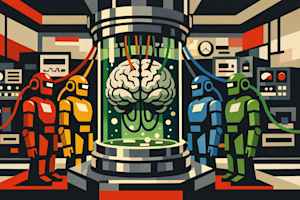
Google PM Shubham Saboo just open-sourced a solution that ditches vector databases entirely. His "Always On Memory Agent" uses LLMs themselves as the memory layer, built with Google's Agent Development Kit and Gemini 3.1 Flash-Lite.
Why does this matter? Persistent memory is the difference between a chatbot and an actual assistant. Imagine an agent that remembers your preferences, past decisions, and context across weeks or months without expensive embedding models and retrieval systems.
The fact that it's MIT licensed and on Google's official GitHub is the cherry on top. Google is essentially saying: "Here's how to build better agents. Please use our models and infrastructure to do it."
The Pattern Nobody's Talking About
Both these stories reveal the same strategic shift: the AI wars are moving from model quality to ecosystem lock-in.
Anthropic isn't trying to beat GPT-4 by another 5% on benchmarks. They're building a marketplace that makes Claude stickier than super glue. Google isn't just releasing better models; they're open-sourcing the infrastructure that makes their platform indispensable.
OpenAI spent 2024-2025 convincing us that raw intelligence was everything. But intelligence is becoming commoditized faster than anyone expected. What's not commoditized? Distribution, integration, and ecosystem effects.
2023-2024: "My model is smarter!"
2025-2026: "My ecosystem is stickier!"
What This Means For You
If you're an enterprise buying AI:
-
Evaluate total ecosystem value, not just API prices. That cheap model might cost more when you need to build everything yourself.
-
Watch for lock-in disguised as convenience. Marketplaces are great until you want to leave. If you're building AI products:
-
Integration > Innovation right now. The companies winning are the ones making AI easier to use, not necessarily better.
-
Persistent memory is your competitive advantage. Users will pay for agents that actually remember them. If you're an AI engineer:
-
Start playing with Google's memory agent. Understanding memory architecture will separate good engineers from great ones in 2026.
The Bottom Line
We're watching the AI industry speedrun the smartphone wars. Remember when every phone manufacturer needed their own app store? That's happening right now with AI models and tooling ecosystems.
The question isn't which model is best anymore. It's which ecosystem you want to bet your company on.
What do you think—are we heading toward three or four dominant AI ecosystems, or will interoperability keep things open? Drop your take in the comments.
Share this post
Help this article travel further
One tap opens the share sheet or pre-fills the post for the platform you want.