Wall Street Just Lost $40B on a Fundamental Misunderstanding of Enterprise Tech
NotionWhen Smart Money Gets It Wrong
IBM lost $40 billion in market value in a single trading day this week. That's roughly the entire GDP of Kenya evaporating in six hours.
The trigger? Anthropic released tools that let Claude translate COBOL code into modern languages like Java and Python. Investors panicked, assuming this spelled doom for IBM's mainframe business. But here's the thing: they completely missed why enterprises actually run mainframes in the first place.
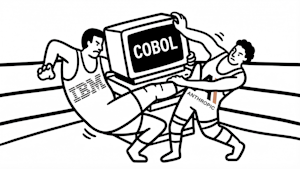
Translation ≠ Modernization
Think of it this way: if I translate your grandmother's handwritten recipe from Italian to English, does that suddenly make it work in a commercial kitchen? Of course not.
COBOL isn't just code sitting in a vacuum. It's deeply embedded in mission-critical systems that process trillions of dollars in transactions daily. We're talking banking systems, airline reservations, government benefits - infrastructure that cannot afford downtime.
Translating the code is the easy part. The hard part? Understanding decades of business logic, ensuring regulatory compliance, maintaining performance characteristics, and migrating without breaking systems that handle 90% of global credit card transactions.
The Real Mainframe Stack:
┌─────────────────────────────┐
│ COBOL Application │ ← AI can translate this
├─────────────────────────────┤
│ Business Logic (40+ yrs) │ ← Context is everything
├─────────────────────────────┤
│ Mainframe Architecture │ ← Built for reliability
├─────────────────────────────┤
│ Hardware Optimizations │ ← Performance matters
├─────────────────────────────┤
│ Compliance & Governance │ ← Regulatory minefield
└─────────────────────────────┘
Why Enterprises Love Their Dinosaurs
Mainframes aren't legacy tech that companies are stuck with. They're deliberate choices for specific workloads. IBM mainframes boast 99.999% uptime, process 30 billion transactions daily, and handle security at a level that modern cloud infrastructure still struggles to match.
Yes, COBOL programmers are retiring. Yes, the talent pool is shrinking. But the solution isn't "translate everything and pray" - it's gradual, methodical modernization with clear understanding of what you're actually replacing.
The Search Revolution Nobody Saw Coming
While Wall Street panicked over COBOL, a potentially bigger story flew under the radar: Nimble just launched an "Agentic Search Platform" that claims 99% accuracy in transforming web data into decision-grade intelligence for enterprises.

Google already rolled out AI Overviews. Bing integrated GPT models. Perplexity is building an entire business on AI-driven search. The way we find information is fundamentally changing, and unlike the COBOL panic, this transformation is actually happening.
What This Really Means
The IBM stock crash reveals something fascinating about how markets evaluate technology: surface-level understanding drives massive capital movements. Investors saw "AI can translate COBOL" and assumed IBM's $60 billion mainframe business was toast, without understanding what mainframes actually do.
Meanwhile, the real disruptions - AI-powered search, enterprise data platforms, fundamental shifts in how we interact with information - are happening with far less drama but potentially far greater impact.
The Hot Take
Translation tools for COBOL are useful. They'll help with documentation, training new developers, and gradual migration strategies. But treating them as mainframe killers shows a fundamental misunderstanding of enterprise technology.
The companies that will win aren't the ones with the best translation tools - they're the ones that understand the difference between code and systems, between syntax and architecture, between what's possible and what's practical.
So here's my question: if the market can get something this fundamental so spectacularly wrong, what other "obvious" tech disruptions are we completely misreading right now?
Share this post
Help this article travel further
One tap opens the share sheet or pre-fills the post for the platform you want.